



In today’s digital world, media is everywhere. From social media platforms and YouTube videos to news channels and online content, students are constantly surrounded by information. Media is no longer just a source of entertainment—it plays a powerful role in shaping how young minds think, behave, and understand the world.
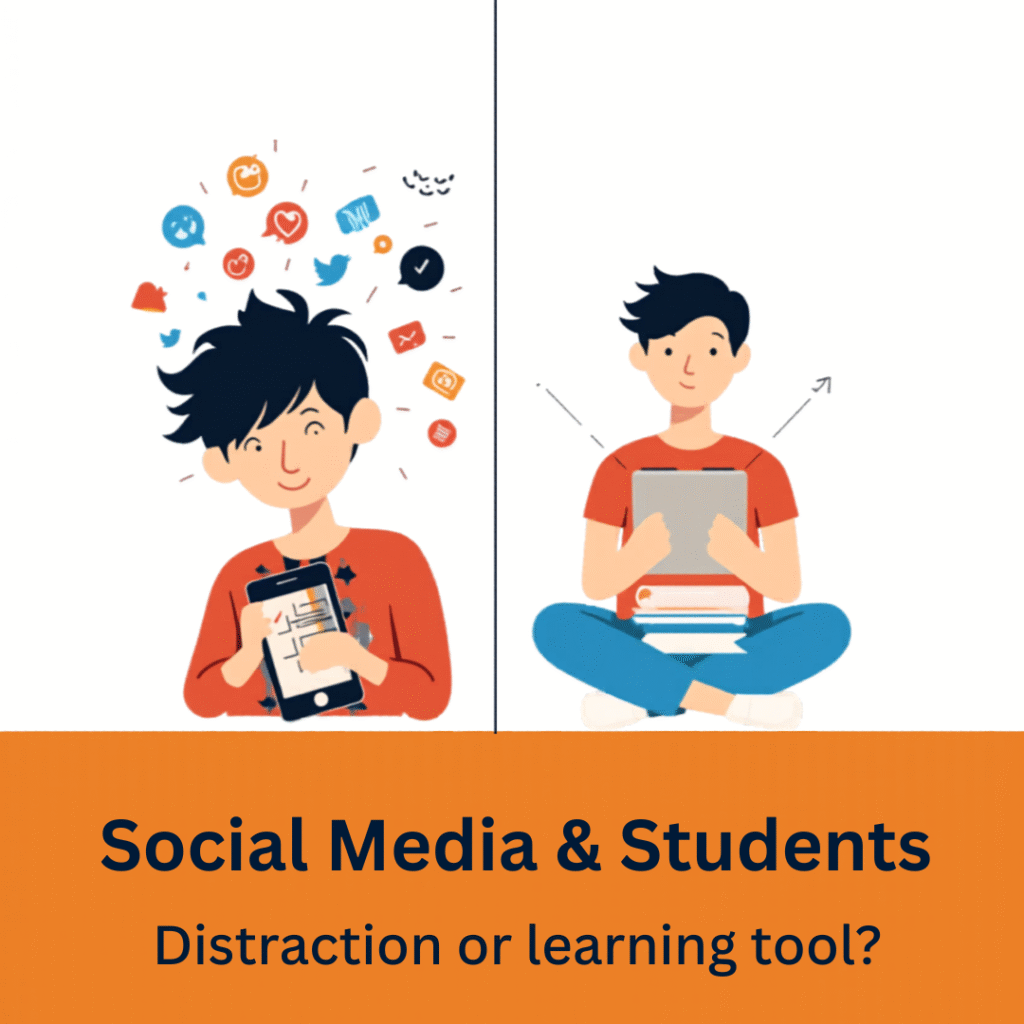
For students, especially in classes 8 to 12, media can be both a tool for growth and a source of distraction. The key lies in how it is used.
How Media Influences Students
1. Builds Awareness and Knowledge
Media helps students stay informed about what’s happening around them. Educational videos, documentaries, and news platforms expose them to real-world issues, science advancements, and global events.
A student who consumes the right content develops:
- Better general knowledge
- Awareness of society
- A broader perspective on life
2. Shapes Thinking and Opinions
Young minds are highly impressionable. The type of content they watch directly affects their mindset, beliefs, and attitudes.
Positive media can:
- Encourage critical thinking
- Promote creativity
- Inspire innovation
On the other hand, negative or misleading content can create confusion and unhealthy comparisons.
3. Encourages Creativity and Expression
Media platforms give students a voice. Whether it’s creating videos, writing blogs, or sharing ideas, students can express themselves freely.
This helps in:
- Building confidence
- Improving communication skills
- Developing creativity
Students who actively create content learn much more than those who only consume it.
4. Impacts Behavior and Lifestyle
Media influences daily habits—from how students speak to how they spend their time.
For example:
- Excessive social media use can reduce focus
- Productive content can motivate better study habits
So, media doesn’t just inform—it also shapes behavior.
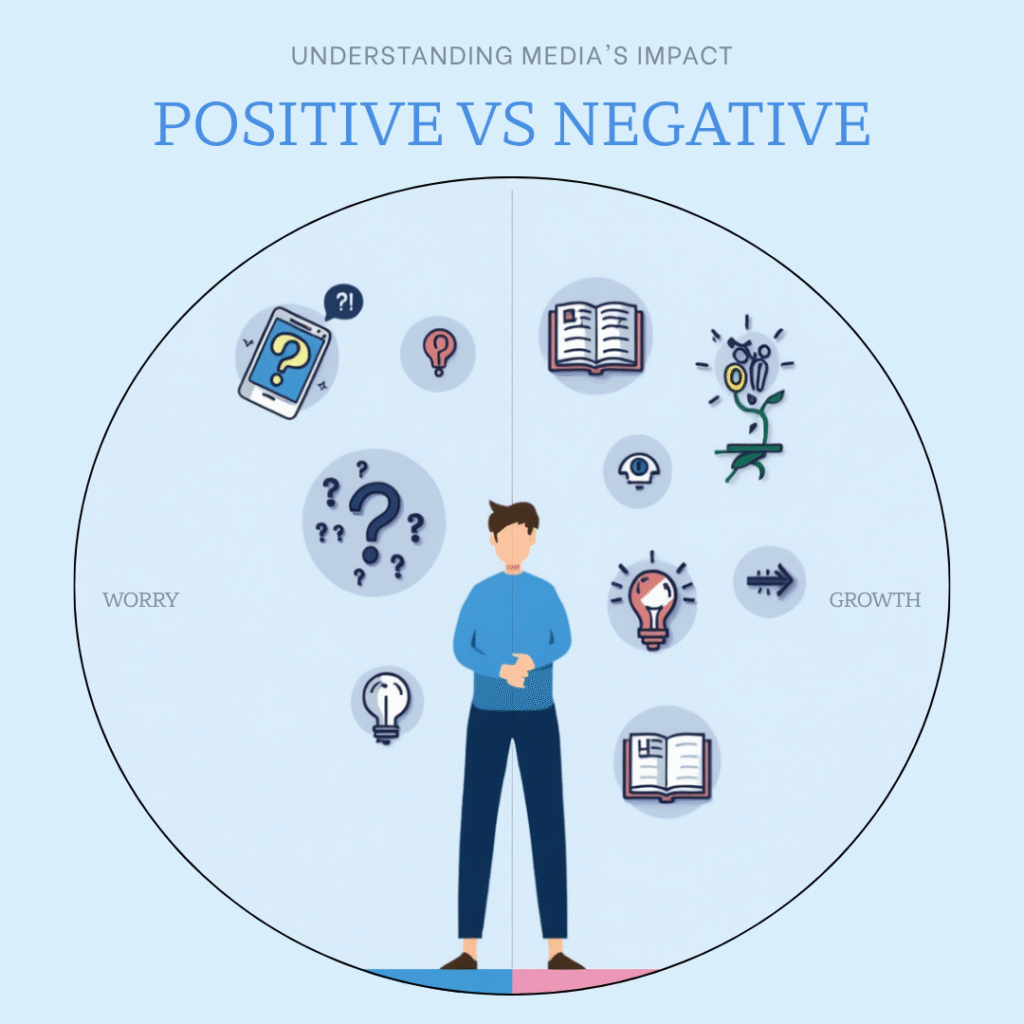
Positive vs Negative Impact of Media
| Positive Impact | Negative Impact |
| Learning new skills online | Addiction to screens |
| Access to global knowledge | Exposure to misinformation |
| Creative expression | Comparison and low confidence |
| Awareness of opportunities | Distraction from studies |
The difference is not in media itself—but in how students use it.
The Role of Parents and Educators
Parents and teachers play a crucial role in guiding students. Instead of restricting media completely, they should help students use it wisely.
They can:
- Encourage educational content
- Limit unnecessary screen time
- Discuss what students watch
- Promote balanced usage
Guidance is always more effective than control.
Why Media Should Be Used as a Learning Tool
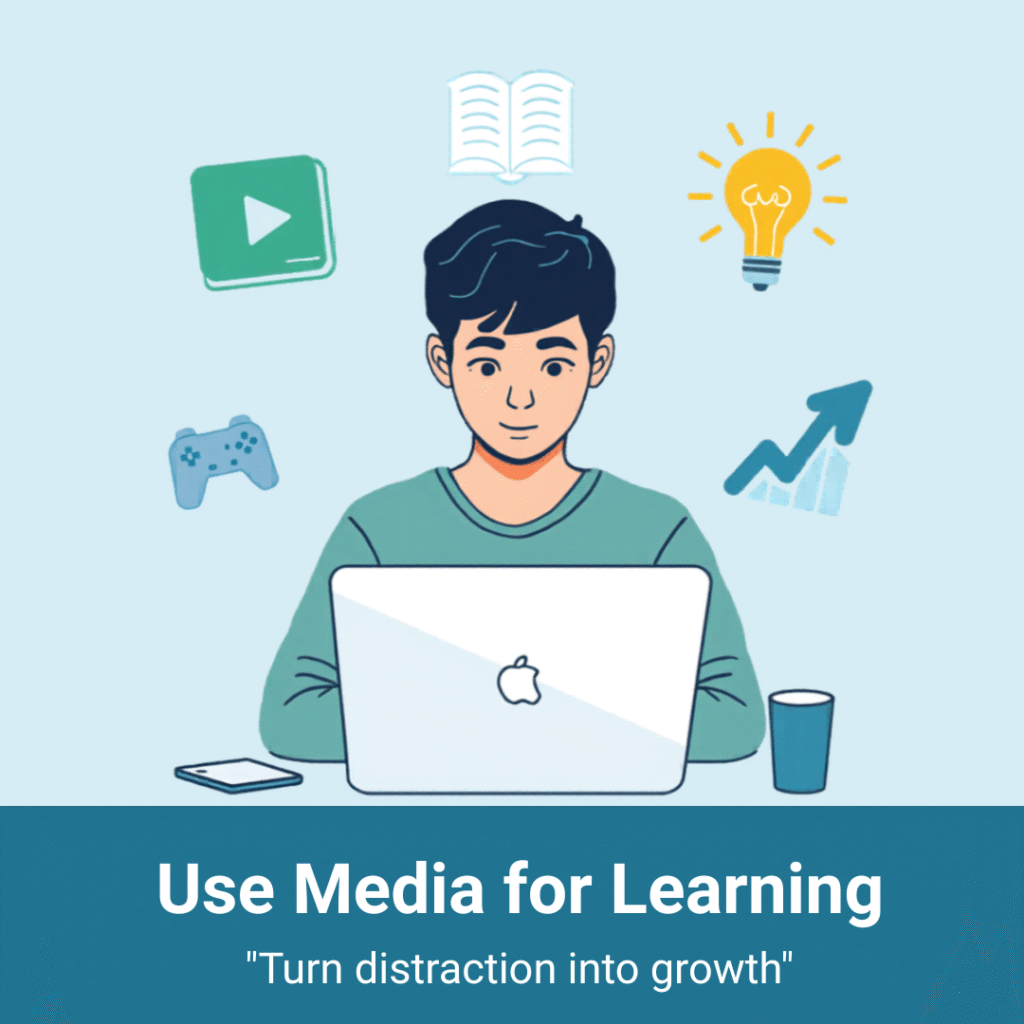
When used correctly, media becomes a powerful educational resource. It can:
- Simplify complex concepts
- Make learning engaging
- Connect students with real-world applications
Platforms that combine education, creativity, and awareness help students grow beyond textbooks.
Conclusion
Media is shaping the future generation every day. It influences how students think, learn, and act. While it has its challenges, it also offers endless opportunities for growth.
The goal is not to avoid media—but to use it smartly.
Students who learn to balance consumption and creation will not only perform better academically but also develop the skills needed for real-life success.