



Social media has become an important part of students’ daily lives. While it offers opportunities for learning, communication, and creativity, excessive or unhealthy use can affect students’ mental health, emotional well-being, and academic performance.
Creates Unhealthy Comparisons
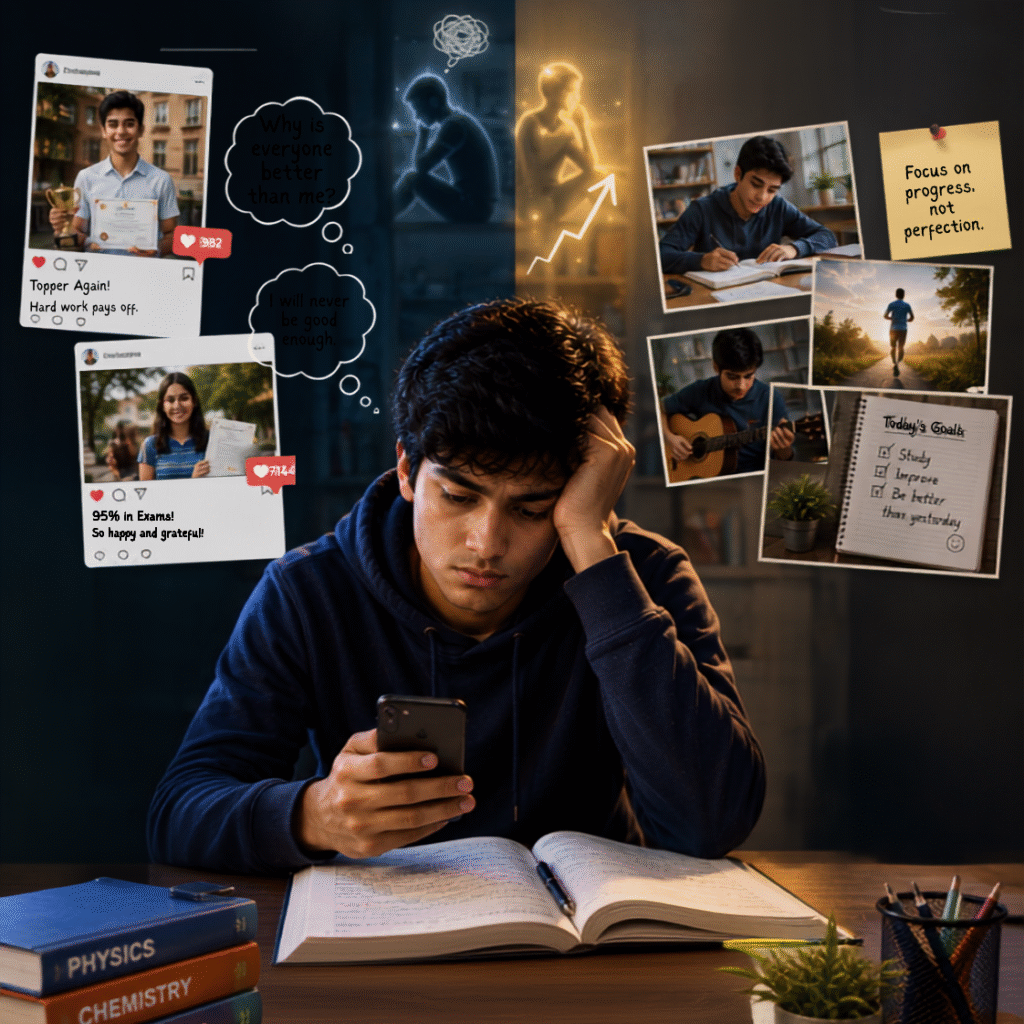
Constant exposure to others’ achievements and lifestyles can make students compare themselves and feel dissatisfied with their own progress.
- Students may compare their appearance, marks, or achievements with others.
- Unrealistic online content can lower self-esteem.
- Constant comparison may reduce confidence and motivation.
- Focusing on personal growth is healthier than seeking online validation.
Increases Stress and Anxiety
Excessive social media use can create unnecessary pressure and emotional stress among students.
- Fear of missing out (FOMO) can increase anxiety.
- Negative comments or online criticism may affect self-confidence.
- Constant notifications can create mental overload.
- Academic pressure may increase due to online distractions.
Affects Focus and Academic Performance
Spending too much time on social media can reduce concentration and productive study time.
- Frequent scrolling interrupts learning.
- Reduced attention span affects classroom performance.
- Students may procrastinate important tasks.
- Balanced screen time improves focus and productivity.
Disturbs Sleep and Daily Routine
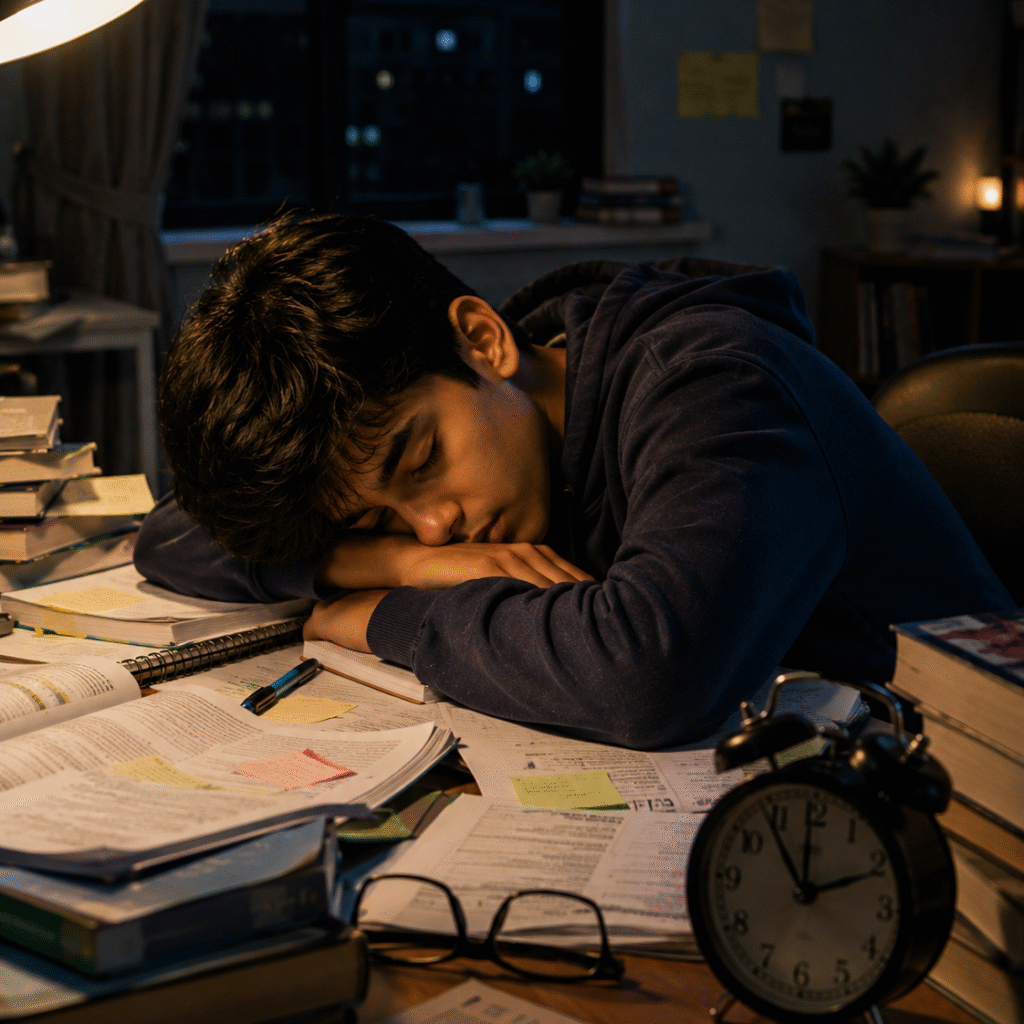
Late-night social media usage can negatively impact students’ physical and mental health.
- Poor sleep affects memory and concentration.
- Lack of rest reduces energy levels.
- Irregular routines increase stress and fatigue.
- Healthy sleep habits improve learning and emotional well-being.
Can Also Offer Positive Opportunities
When used wisely, social media can become a valuable learning and communication tool.
- Students can access educational content and online courses.
- It helps develop creativity and digital skills.
- Learning communities provide knowledge and motivation.
- Students can connect with experts and educational resources.
Role of Parents and Educators
Parents and teachers can help students develop healthy digital habits instead of completely restricting social media.
- Encourage responsible and balanced usage.
- Discuss online safety and digital well-being.
- Set healthy screen-time boundaries.
- Promote offline activities and face-to-face interactions.
Conclusion
Social media is neither completely good nor completely bad. Its impact depends on how students use it. By maintaining a healthy balance, limiting unnecessary screen time, and focusing on meaningful online activities, students can protect their mental health while enjoying the benefits of the digital world.